The Indian Rupee has reached a record low level of ₹96.70 against the US Dollar? What exactly is the complete story behind it?
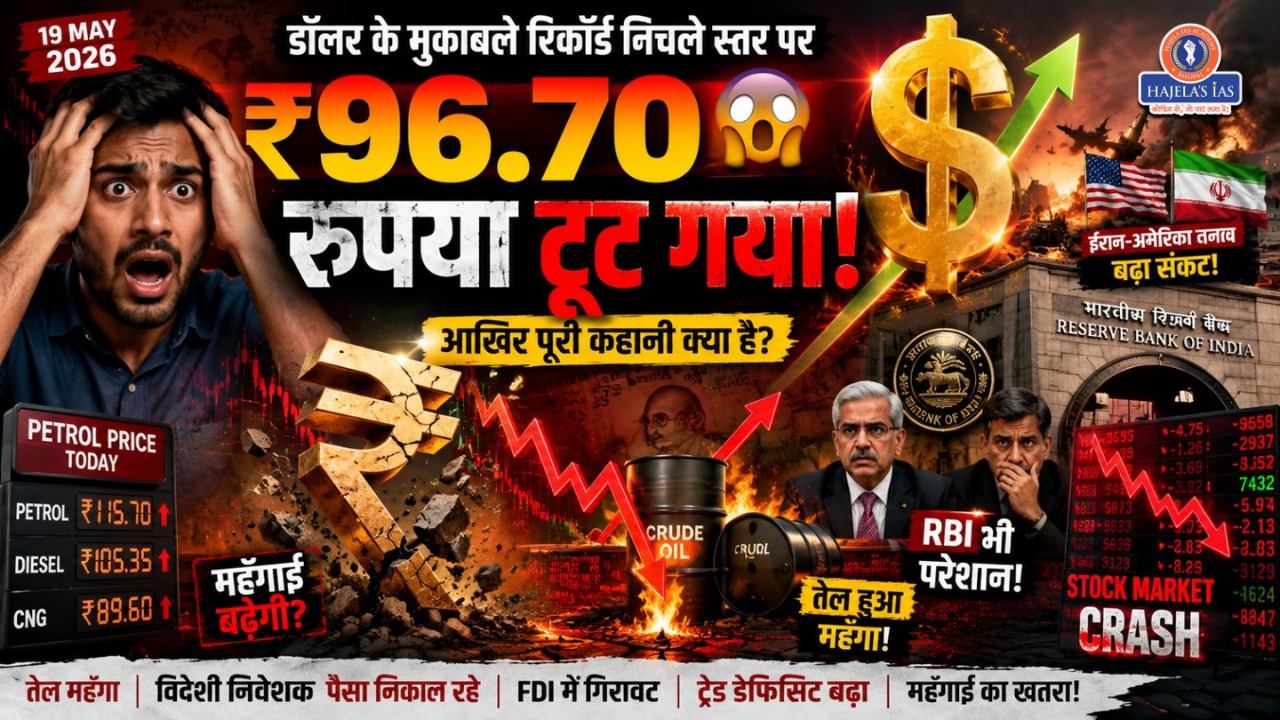
The Indian Rupee has reached a record low level of ₹96.70 against the US Dollar.
The government is concerned, the RBI is intervening in the market, oil prices are increasing, and foreign investors are withdrawing money from India.
But the question is — is the Iran–US tension alone responsible for this?
Or is there a larger story related to the Indian economy hidden behind it?
Why does the Rupee depreciate, what impact does it have on common people, and what is the government doing to prevent it?
When we say that "the Rupee has depreciated", it means that:
• Earlier, fewer Rupees were required to purchase 1 Dollar
• Now, more Rupees are required to purchase 1 Dollar
Example:
• Earlier: 1 Dollar = ₹83
• Now: 1 Dollar = ₹96.70
This means that the Indian currency has weakened and the Dollar has strengthened.
Why does the Rupee depreciate? (Demand & Supply Theory)
The entire story is hidden in just two words:
Demand and Supply
If the demand for something increases and its supply decreases, then that thing becomes expensive.
Currently in India:
• The demand for Dollars is increasing
• The supply of Dollars is decreasing
Therefore, the Dollar is becoming expensive and the Rupee is weakening.
Why is the demand for Dollars increasing?
1. Increase in Crude Oil Prices
India imports more than approximately 85% of its crude oil requirements. Payment for purchasing oil has to be made in Dollars.
What happened?
• Tensions in the Middle East increased
• Possibility of an Iran–US conflict
• News of an attack on a nuclear plant in the United Arab Emirates
• Brent crude reached approximately $111 per barrel
Expensive oil → more Dollars required → demand for Dollars increased → Rupee depreciated.
2. Withdrawal of Funds by Foreign Investors (FPI Outflow)
When foreign investors invest in the Indian stock market:
• They bring Dollars
• They sell Dollars and purchase Rupees
• This strengthens the Rupee
However, when they withdraw money:
• They sell shares
• They convert Rupees into Dollars
• They purchase Dollars and take them out of the country
As a result:
• The demand for Dollars increases
• The Rupee weakens
Last year, foreign investors withdrew approximately 160 billion Dollars from the Indian market.
After the beginning of the war, withdrawals of approximately 210 billion Dollars occurred during March–April alone.
3. Decline in FDI (Foreign Direct Investment) by Foreign Companies
FDI means:
• Foreign companies establish factories, companies, or businesses in India
Earlier:
• From 2014–15 to 2023–24, approximately 310 billion Dollars of FDI arrived annually on average
However:
• In 2024–25, only approximately 10 billion Dollars arrived
• In 2025–26, approximately 63 billion Dollars arrived
This means:
• The inflow of Dollars from outside decreased
• Supply declined
• The Rupee started weakening
AI Revolution and India’s Challenge
Another major reason is the global AI revolution.
Earlier, India was considered very strong in the IT sector.
However:
• The United States and China advanced rapidly in AI
• The UAE and the UK also made substantial investments
• India’s AI companies are still in the initial stage
As a result:
• A large share of technology investment moved to other countries
• Foreign investment in India decreased
What is Trade Deficit?
When:
• India purchases more goods from foreign countries (Import)
• But sells less goods (Export)
Then it is called a Trade Deficit.
This means:
• More Dollars flow out of the country
• Pressure on the Rupee increases
What will be the impact on common people?
1. Inflation will increase
The items that India imports include:
• Crude oil
• Electronics
• Mobile phones
• Computer parts
• Edible oil
Now, more Rupees will have to be paid for these items.
Result:
• Petrol and diesel become expensive
• Transportation becomes expensive
• Goods become expensive
• Inflation increases
This is called:
"Imported Inflation"
2. Foreign travel and education become expensive
If:
• Children go to the United States for education
• People go abroad for travel
• Fees have to be paid in Dollars
Then now, more Rupees will have to be spent.
3. Mobile phones, laptops, and cars become expensive
Because:
• Many of their components come from foreign countries
• The cost for companies will increase
• Prices will increase
Is there any benefit from the depreciation of the Rupee?
1. Benefit for export companies
Companies such as IT, Pharma, and Textile receive payments in Dollars.
Now:
• More Rupees will be received in exchange for 1 Dollar
• Their earnings may increase
2. Benefit for people sending money from abroad
People who send money to India from:
• United States
• Dubai
• Gulf countries
will receive more Rupees in exchange.
This is called Remittance.
India is among the countries receiving the highest remittances in the world.
What are the Government and RBI doing?
Government Measures
1. Restriction on imports of silver and precious metals
So that:
• Demand for Dollars decreases
2. Appeal for reduced use of petrol and diesel
So that:
• Oil imports decrease
• Dollars are saved
RBI Measures
1. Intervention in the market by selling Dollars
RBI sells Dollars from its Forex Reserves.
Objective:
• There should not be a shortage of Dollars
• The Rupee should not depreciate excessively
The biggest question — is war alone responsible?
No.
The war has certainly worsened the situation, but:
• The Rupee had already depreciated by approximately 11% during the last year
• After the Iran–US tension, an additional depreciation of approximately 5% occurred
The actual problems are:
• Decline in FDI
• FPI withdrawals
• Shortage of Dollars
• Oil imports
• Global uncertainty
Why do foreign investors become concerned?
Suppose:
• An investor made an investment when 1 Dollar = ₹90
• The value of the investment increased to ₹100
However:
• Now, 1 Dollar = ₹100
Then, when the investor withdraws the money,
the investor will again receive only 1 Dollar.
This means:
• The profit disappears
Therefore, foreign investors prefer countries with stable currencies.
The biggest future challenge for India
Not merely saving Dollars,
but earning and attracting Dollars
India needs to:
• Increase FDI
• Attract investment in AI and the technology sector
• Increase exports
• Reduce the trade deficit
• Reduce dependence on energy imports
What may happen in the future?
If:
• Middle East tensions increase
• Oil becomes more expensive
• Foreign investment does not increase
Then:
• The Rupee may come under further pressure
However, if:
• Investment in India increases
• Improvements occur in AI and manufacturing
• Exports become stronger
Then the Rupee may become stable.
"The depreciation of the Rupee is not merely a currency crisis, but also an indication of India's broader economic challenges.
Dependence on oil imports, a decline in foreign investment, and global geopolitical tensions have increased pressure on the Indian economy.
However, this situation also provides India with an opportunity to formulate a new economic strategy through investment, exports, and technological reforms."
Topic Related Videos ⬇️
The Indian Rupee has reached a record low level of ₹96.70 against the US Dollar? What exactly is the complete story behind it?
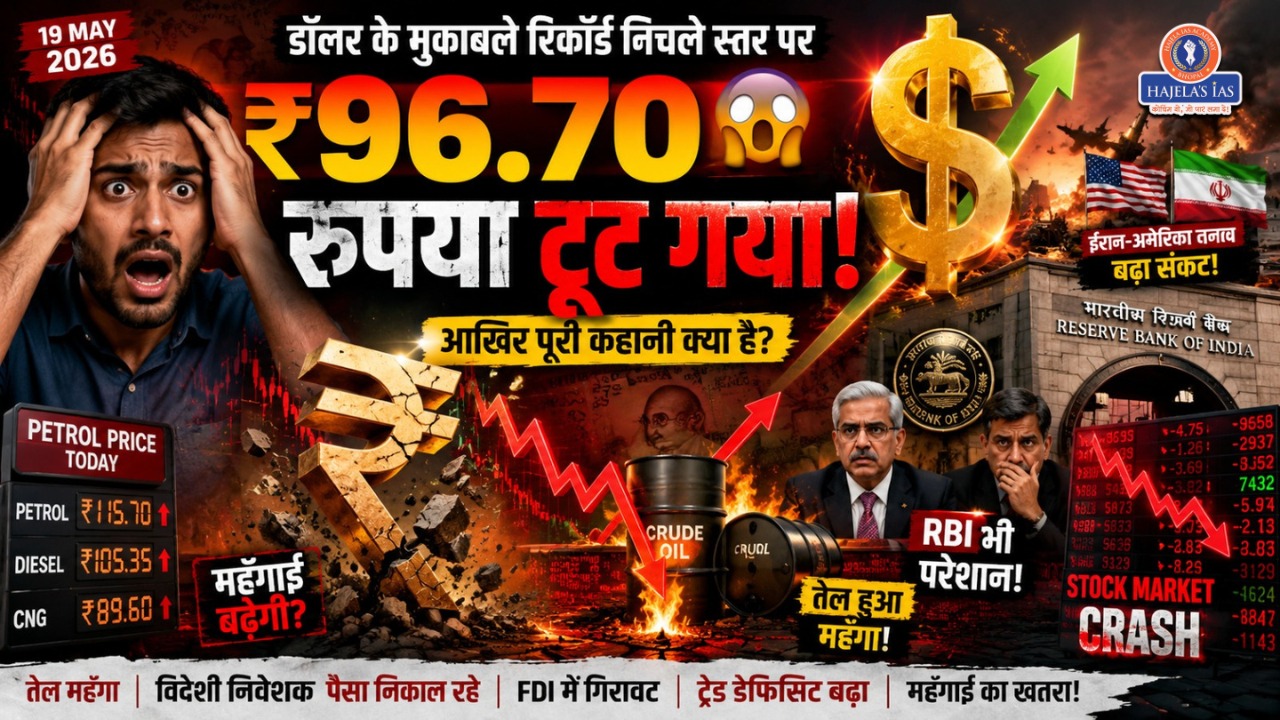
The Indian Rupee has reached a record low level of ₹96.70 against the US Dollar.
The government is concerned, the RBI is intervening in the market, oil prices are increasing, and foreign investors are withdrawing money from India.
But the question is — is the Iran–US tension alone responsible for this?
Or is there a larger story related to the Indian economy hidden behind it?
Why does the Rupee depreciate, what impact does it have on common people, and what is the government doing to prevent it?
When we say that "the Rupee has depreciated", it means that:
• Earlier, fewer Rupees were required to purchase 1 Dollar
• Now, more Rupees are required to purchase 1 Dollar
Example:
• Earlier: 1 Dollar = ₹83
• Now: 1 Dollar = ₹96.70
This means that the Indian currency has weakened and the Dollar has strengthened.
Why does the Rupee depreciate? (Demand & Supply Theory)
The entire story is hidden in just two words:
Demand and Supply
If the demand for something increases and its supply decreases, then that thing becomes expensive.
Currently in India:
• The demand for Dollars is increasing
• The supply of Dollars is decreasing
Therefore, the Dollar is becoming expensive and the Rupee is weakening.
Why is the demand for Dollars increasing?
1. Increase in Crude Oil Prices
India imports more than approximately 85% of its crude oil requirements. Payment for purchasing oil has to be made in Dollars.
What happened?
• Tensions in the Middle East increased
• Possibility of an Iran–US conflict
• News of an attack on a nuclear plant in the United Arab Emirates
• Brent crude reached approximately $111 per barrel
Expensive oil → more Dollars required → demand for Dollars increased → Rupee depreciated.
2. Withdrawal of Funds by Foreign Investors (FPI Outflow)
When foreign investors invest in the Indian stock market:
• They bring Dollars
• They sell Dollars and purchase Rupees
• This strengthens the Rupee
However, when they withdraw money:
• They sell shares
• They convert Rupees into Dollars
• They purchase Dollars and take them out of the country
As a result:
• The demand for Dollars increases
• The Rupee weakens
Last year, foreign investors withdrew approximately 160 billion Dollars from the Indian market.
After the beginning of the war, withdrawals of approximately 210 billion Dollars occurred during March–April alone.
3. Decline in FDI (Foreign Direct Investment) by Foreign Companies
FDI means:
• Foreign companies establish factories, companies, or businesses in India
Earlier:
• From 2014–15 to 2023–24, approximately 310 billion Dollars of FDI arrived annually on average
However:
• In 2024–25, only approximately 10 billion Dollars arrived
• In 2025–26, approximately 63 billion Dollars arrived
This means:
• The inflow of Dollars from outside decreased
• Supply declined
• The Rupee started weakening
AI Revolution and India’s Challenge
Another major reason is the global AI revolution.
Earlier, India was considered very strong in the IT sector.
However:
• The United States and China advanced rapidly in AI
• The UAE and the UK also made substantial investments
• India’s AI companies are still in the initial stage
As a result:
• A large share of technology investment moved to other countries
• Foreign investment in India decreased
What is Trade Deficit?
When:
• India purchases more goods from foreign countries (Import)
• But sells less goods (Export)
Then it is called a Trade Deficit.
This means:
• More Dollars flow out of the country
• Pressure on the Rupee increases
What will be the impact on common people?
1. Inflation will increase
The items that India imports include:
• Crude oil
• Electronics
• Mobile phones
• Computer parts
• Edible oil
Now, more Rupees will have to be paid for these items.
Result:
• Petrol and diesel become expensive
• Transportation becomes expensive
• Goods become expensive
• Inflation increases
This is called:
"Imported Inflation"
2. Foreign travel and education become expensive
If:
• Children go to the United States for education
• People go abroad for travel
• Fees have to be paid in Dollars
Then now, more Rupees will have to be spent.
3. Mobile phones, laptops, and cars become expensive
Because:
• Many of their components come from foreign countries
• The cost for companies will increase
• Prices will increase
Is there any benefit from the depreciation of the Rupee?
1. Benefit for export companies
Companies such as IT, Pharma, and Textile receive payments in Dollars.
Now:
• More Rupees will be received in exchange for 1 Dollar
• Their earnings may increase
2. Benefit for people sending money from abroad
People who send money to India from:
• United States
• Dubai
• Gulf countries
will receive more Rupees in exchange.
This is called Remittance.
India is among the countries receiving the highest remittances in the world.
What are the Government and RBI doing?
Government Measures
1. Restriction on imports of silver and precious metals
So that:
• Demand for Dollars decreases
2. Appeal for reduced use of petrol and diesel
So that:
• Oil imports decrease
• Dollars are saved
RBI Measures
1. Intervention in the market by selling Dollars
RBI sells Dollars from its Forex Reserves.
Objective:
• There should not be a shortage of Dollars
• The Rupee should not depreciate excessively
The biggest question — is war alone responsible?
No.
The war has certainly worsened the situation, but:
• The Rupee had already depreciated by approximately 11% during the last year
• After the Iran–US tension, an additional depreciation of approximately 5% occurred
The actual problems are:
• Decline in FDI
• FPI withdrawals
• Shortage of Dollars
• Oil imports
• Global uncertainty
Why do foreign investors become concerned?
Suppose:
• An investor made an investment when 1 Dollar = ₹90
• The value of the investment increased to ₹100
However:
• Now, 1 Dollar = ₹100
Then, when the investor withdraws the money,
the investor will again receive only 1 Dollar.
This means:
• The profit disappears
Therefore, foreign investors prefer countries with stable currencies.
The biggest future challenge for India
Not merely saving Dollars,
but earning and attracting Dollars
India needs to:
• Increase FDI
• Attract investment in AI and the technology sector
• Increase exports
• Reduce the trade deficit
• Reduce dependence on energy imports
What may happen in the future?
If:
• Middle East tensions increase
• Oil becomes more expensive
• Foreign investment does not increase
Then:
• The Rupee may come under further pressure
However, if:
• Investment in India increases
• Improvements occur in AI and manufacturing
• Exports become stronger
Then the Rupee may become stable.
"The depreciation of the Rupee is not merely a currency crisis, but also an indication of India's broader economic challenges.
Dependence on oil imports, a decline in foreign investment, and global geopolitical tensions have increased pressure on the Indian economy.
However, this situation also provides India with an opportunity to formulate a new economic strategy through investment, exports, and technological reforms."
Topic Related Videos ⬇️