India Makes a Major Leap in Global Market Competitiveness Ranking

India has recorded a significant improvement in global rankings for enhancing market competition and reducing anti-competitive market distortions. A new report has upgraded India's position from 82nd to 57th, reflecting the positive impact of structural reforms implemented over the past decade. The improvement indicates that these reforms are now being recognized in international assessments.
India's Position in the Report
According to the report titled "India’s Next Growth Frontier: Reducing Anti-Competitive Market Distortions to Build on India’s 2010–2023 Reform Progress," released on 30 July 2026, India ranks 57th on the Market Distortions Performance Index.
The index evaluates countries based on three key pillars:
- Protection of property rights
- Domestic competition
- International competition
The report attributes India's improved ranking to a series of reforms introduced between 2010 and 2023, aimed at making markets more open, transparent, and competitive.
Reforms That Contributed to the Improvement
The report highlights reforms in taxation, insolvency resolution, regulation, and trade facilitation as the primary drivers behind India's improved performance. Two major reforms stand out:
- Goods and Services Tax (GST): Introduced a unified indirect tax system by subsuming multiple central and state indirect taxes, creating a common national market.
- Insolvency and Bankruptcy Code (IBC), 2016: Established a time-bound framework for insolvency resolution and liquidation for companies, partnership firms, and individuals, improving the ease of doing business.
Competition Policy and Institutional Framework
India's competition policy is governed by the Competition Act, 2002, which regulates:
- Anti-competitive agreements
- Abuse of dominant market position
- Mergers and combinations
The law is enforced by the Competition Commission of India (CCI), a statutory authority responsible for promoting fair competition and preventing practices that adversely affect the market.
The report also notes that India's reforms have gone beyond taxation and trade, contributing to improvements in market structure, regulatory quality, and the overall investment climate.
Conclusion : India's rise in the global market competitiveness ranking reflects its sustained efforts to build a more competitive, rules-based, transparent, and investment-friendly economy. The recognition of these reforms in international assessments highlights the country's progress toward creating a more efficient and dynamic market environment.
Topic Related Videos ⬇️

Vande Mataram Granted Legal Protection Under National Honour Law
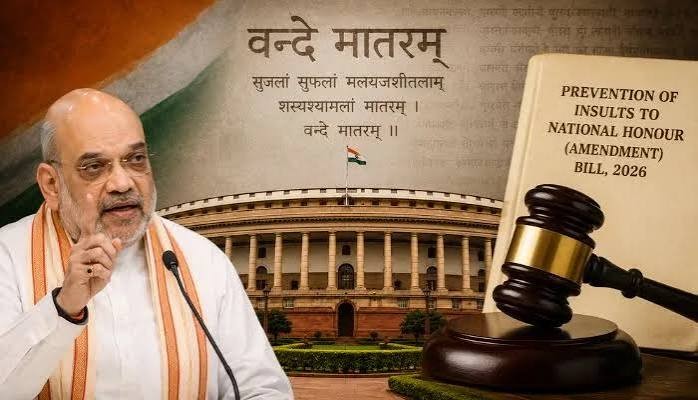
On 29 July 2026, the Rajya Sabha passed the Prevention of Insults to National Honour (Amendment) Bill, 2026. The Bill amends the Prevention of Insults to National Honour Act, 1971, extending legal protection to the national song, Vande Mataram, on par with the national anthem, Jana Gana Mana.
Prevention of Insults to National Honour Act, 1971
The Prevention of Insults to National Honour Act, 1971 is a central law that makes the insult or disrespect of the National Flag, the Constitution of India, and the National Anthem a punishable offence. Through the 2026 amendment, Vande Mataram has also been brought under the legal protection of the Act. The amendment further creates a separate offence for intentionally disrupting or preventing the singing of the national song.
Legal Provisions Related to Vande Mataram
Under the amended law, any person who intentionally prevents the singing of Vande Mataram or disturbs an assembly engaged in its singing may face imprisonment for up to three years, a fine, or both.
The amendment also grants Vande Mataram legal recognition under the Act on par with Jana Gana Mana.
Parliamentary Procedure
The Bill was introduced in the Rajya Sabha on 24 July 2026 by the Minister of State for Home Affairs, Nityanand Rai. During the debate, nearly all opposition members staged a walkout, following which the Bill was passed by voice vote.
Amendment on the Occasion of the 150th Anniversary
The amendment was introduced as part of the 150th anniversary commemorations of Vande Mataram. It also provides that the playing or singing of Vande Mataram shall be mandatory during official events in State Legislative Assemblies.
Important Facts for Exams
- Vande Mataram was written by Bankim Chandra Chattopadhyay.
- It first appeared in his novel Anandamath, published in 1882.
- Jana Gana Mana was adopted as the National Anthem of India on 24 January 1950.
- Vande Mataram is the National Song of India, not the National Anthem.
- The Prevention of Insults to National Honour Act, 1971 is the principal law that protects the dignity of the National Flag, the Constitution, and the National Anthem.
- The Prevention of Insults to National Honour (Amendment) Bill, 2026 extends legal protection to Vande Mataram and makes the intentional disruption of its singing a punishable offence.
Conclusion
The Prevention of Insults to National Honour (Amendment) Bill, 2026 aims to provide legal protection to Vande Mataram, ensure its dignity, and further strengthen citizens' constitutional responsibility towards India's national symbols. The amendment is regarded as a significant step in preserving the country's cultural heritage and national identity.
Topic Related Videos ⬇️