Private Investment in India's Space Sector
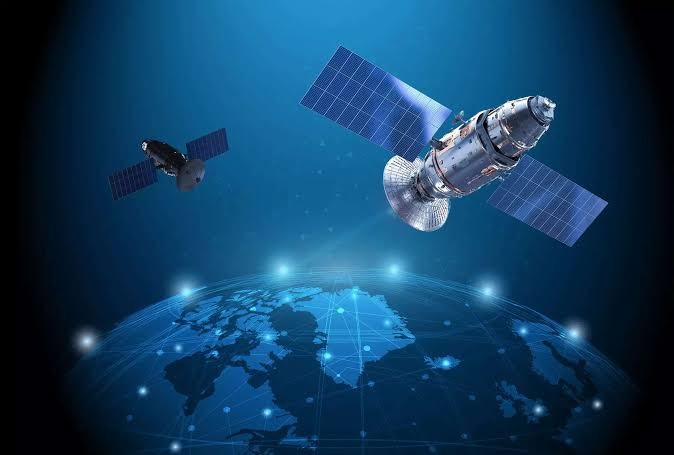
India's space sector has reached a new milestone in attracting private investment. As of March 31, 2026, cumulative private investment in the sector had risen to US$618.5 million, compared to US$100.5 million in 2021–22. According to the Government of India, US$187 million was invested during 2026 alone. This information was shared by Dr. Jitendra Singh, Minister of State (Independent Charge) for Science and Technology, in the Rajya Sabha on July 23, 2026.
Private Participation is Transforming India's Space Ecosystem
India's space sector is no longer limited to government agencies. It now includes non-governmental entities (NGEs), space startups, and private companies engaged in developing satellite systems, launch services, and space-based applications.
The impact of this transformation is evident in the rapid growth of India's space startup ecosystem. While there was only one active space startup in 2014, the number has grown to more than 400 by 2026. This remarkable expansion has been driven by a series of policy reforms that opened the space sector to private participation, encouraging innovation, investment, and technological competitiveness.
Role of IN-SPACe and the Authorization Framework
To facilitate and regulate private participation, the Government established the Indian National Space Promotion and Authorization Centre (IN-SPACe) in 2020. It serves as an autonomous nodal agency responsible for promoting, authorizing, and supervising private space activities in India.
IN-SPACe acts as a single-window interface between private companies and ISRO, ensuring that non-government entities can participate in space activities under a transparent and streamlined regulatory framework.
Policy Support, Funding, and the Road Ahead
The Indian Space Policy 2023 serves as the principal policy framework for promoting private sector participation in the country's space industry. In addition, the government has introduced liberalized Foreign Direct Investment (FDI) norms for selected space activities to attract global investment.
To support startups and private enterprises, the government has also launched the IN-SPACe Seed Fund and established a ₹1,000 crore Venture Capital Fund dedicated to the space sector.
These initiatives are aimed not only at increasing investment but also at strengthening India's position in the global space economy. With growing private participation in satellite manufacturing, launch services, ground infrastructure, and space-based services, India's space industry is expanding its competitiveness, innovation, and overall capabilities.
Topic Related Videos ⬇️

India Develops Its First Indigenous Expendable Turbojet Engine

India has developed its first indigenous expendable turbojet engine, marking a significant milestone in the country's defence technology capabilities. The engine was designed by the Gas Turbine Research Establishment (GTRE), a laboratory of the Defence Research and Development Organisation (DRDO), while its manufacturing and assembly were carried out by Azad Engineering, based in Hyderabad.
What is a Turbojet Engine?
A turbojet engine is a type of gas turbine engine that generates thrust by compressing air, burning fuel, and expelling high-speed exhaust gases through a nozzle.
An expendable turbojet engine is designed for single-use or limited-use applications. It is primarily used in missiles, drones, and other unmanned defence systems.
Development and Industrial Partnership
Azad Engineering completed the manufacturing of the engine and delivered it to GTRE in approximately 24 months.
The official handover took place on 22 July 2026 in the presence of:
- Rakesh Chopdar – Founder and Chief Executive Officer (CEO), Azad Engineering
- Dr. K. Rajalakshmi Menon – Distinguished Scientist and Director General (Aeronautical Systems), DRDO
- Dr. S. V. Ramanamurty – Outstanding Scientist and Director, GTRE
Applications in Defence Systems
The indigenous turbojet engine is intended for use in the following defence platforms:
- Naval anti-ship missiles
- Medium-range anti-drone systems
- Unmanned Aerial Vehicles (UAVs)
- Air-to-air missiles
- Air-to-surface missiles
Turbojet propulsion is widely used in various classes of missiles because it offers a compact design, high-speed performance, and the ability to sustain long-range flight.
Important Facts for Exams
- GTRE (Gas Turbine Research Establishment) is a premier laboratory under DRDO, dedicated to the development of gas turbine and jet propulsion systems.
- Azad Engineering is headquartered in Hyderabad, Telangana.
- Developing jet engine technology requires advanced metallurgy, high-precision manufacturing, and exceptional reliability.
- The Atmanirbhar Bharat (Self-Reliant India) initiative aims to strengthen India's technological and industrial self-reliance in strategic sectors, including defence.
Strategic Significance
Jet engine technology is among the most complex and advanced defence technologies in the world, with only a handful of countries possessing this capability. India's first indigenous expendable turbojet engine provides a domestic propulsion solution for defence platforms, reducing dependence on foreign technologies while accelerating the indigenous development of missiles, drones, and other advanced defence systems.
This achievement represents a significant step toward Atmanirbhar Bharat and enhances India's technological self-reliance in the defence sector.
Topic Related Videos ⬇️