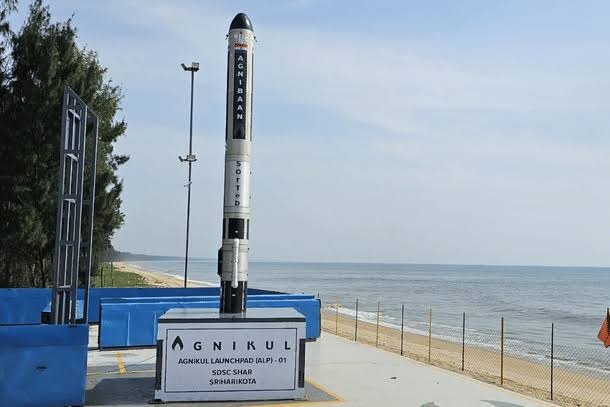
Agnikul Cosmos Mission-02 and Reusable Rocket Technology
Context
India’s private space company Agnikul Cosmos is preparing for Mission-02, which is considered the first attempt by India’s private sector to develop an orbital-class reusable rocket.
Key Highlights
- Mission-02 will use the Agnibaan launch vehicle.
- The primary objective is to recover the first-stage booster by bringing it back to Earth in a controlled manner and retrieving it from the sea.
- The mission will also demonstrate the extended orbital capability of the Convertible Upper Stage after deploying the payload into orbit.
Reusable Rocket Technology
A reusable rocket is designed to safely recover one or more stages of a launch vehicle after liftoff so that they can be refurbished and reused for future missions.
Advantages:
- Reduces launch costs significantly (up to 80%).
- Increases the frequency and efficiency of space missions.
- Makes the launch of small satellites more affordable.
- Promotes sustainable and competitive growth in the space sector.
Features of the Agnibaan Rocket
- Developed to launch small satellites into Low Earth Orbit (LEO).
- Its Convertible Upper Stage remains operational in orbit even after payload deployment and can serve as a platform for multiple orbital missions.
- The technology has received patents in India, the United States, and Europe.
Other Facts
- In July 2026, former ISRO Chairman S. Somanath joined Agnikul Cosmos' Board as an Observer.
- In November 2025, the company raised US$17 million in funding, reaching a valuation of approximately US$500 million.
UPSC/PSC Relevance
- GS Paper III: Space Technology, Science & Technology, Private Space Sector.
- Prelims: Agnikul Cosmos, Agnibaan, Reusable Rocket Technology, Low Earth Orbit (LEO).
- Mains: Role of the private space sector, significance of reusable launch vehicle technology, reduction in launch costs, India's space economy, and the role of IN-SPACe in promoting private participation.
Topic Related Videos ⬇️
Zero-Dose Children and India's Immunization Programme
Context
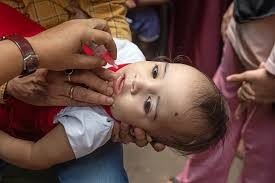
According to the WHO–UNICEF Joint Report (2025), around 679,000 children in India did not receive even a single routine vaccine dose during their first year of life (Zero-Dose Children). However, this is a significant improvement compared to 909,000 in 2024 and 1.592 million in 2023.
Who are Zero-Dose Children?
- Children who do not receive any routine vaccination, particularly the first dose of the Diphtheria-Tetanus-Pertussis (DTP1) vaccine, during their first year of life.
- They are an important indicator of the reach, equity, and effectiveness of a country's public health system.
India's Achievements
- In 2025, 95% of children received DTP3 and the second dose of the Measles vaccine.
- For the first time since 2001, India is no longer among the top 10 countries with the highest number of unvaccinated children against measles.
- Under the Universal Immunization Programme (UIP), approximately 26 million infants and 29 million pregnant women receive free vaccination every year.
- The UIP currently covers 12 vaccine-preventable diseases.
Key Challenges
- Migrant populations and urban slum dwellers.
- Remote, tribal, and difficult-to-reach areas.
- Vaccine Hesitancy due to misinformation, myths, and fear regarding vaccines.
- Gaps in healthcare infrastructure and data tracking systems.
Government Initiatives
- Zero-Dose Implementation Plan for 143 high-priority districts.
- Door-to-door surveys and awareness campaigns conducted by ASHA and ANM workers.
- Expansion of immunization coverage through Mission Indradhanush and the Universal Immunization Programme (UIP).
Global Perspective & UPSC/PSC Relevance
- In 2025, about 13.5 million Zero-Dose children were reported globally, with the majority living in countries affected by conflict, political instability, or extreme poverty.
- Despite its large population, India's Zero-Dose rate is only about 0.06%, reflecting significant progress in its public health system.
UPSC/PSC Relevance
- GS Paper II: Health, Human Resource Development, and Government Welfare Schemes.
- Prelims: Universal Immunization Programme (UIP), Mission Indradhanush, DTP, WHO, UNICEF, Zero-Dose Children.
- Mains: Universal Immunization, Health Equity, SDG-3 (Good Health and Well-being), and India's Public Health Strategy.
Topic Related Videos ⬇️
Soushrutam 2026 and Ayurvedic Surgery
Context
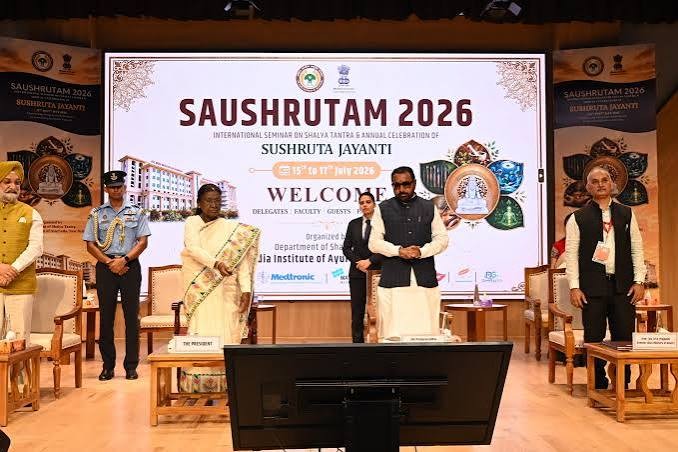
On 15 July 2026, President Droupadi Murmu inaugurated "Soushrutam 2026" at the All India Institute of Ayurveda (AIIA), New Delhi. The international symposium, organized by the Ministry of AYUSH, was held from 15–17 July 2026 on the occasion of Sushruta Jayanti.
Objectives of Soushrutam 2026
- To promote Ayurvedic Surgery at the global level.
- To integrate Evidence-Based Ayurveda with modern medical research.
- To strengthen medical education, research, and institutional collaboration.
- To integrate Ayurveda with modern healthcare services and medical tourism.
Contribution of Sushruta
- Sushruta is regarded as the "Father of Surgery" in Indian medical history.
- His renowned work, the Sushruta Samhita, provides a comprehensive description of surgery, anatomy, diagnosis, and treatment.
- Sushruta Jayanti is celebrated annually to honor his outstanding contributions to medicine and surgery.
Major Announcements
- Inauguration of an AI-enabled 3 Tesla MRI facility at the All India Institute of Ayurveda (AIIA).
- Release of a study by the National Commission for Indian System of Medicine (NCISM) on the career prospects of female graduates in Ayurveda.
- Ayurveda postgraduate doctors with specialized training are now permitted to perform 58 surgical procedures, including:
- 39 General Surgical Procedures
- 19 ENT, Ophthalmic, and Dental Surgical Procedures
Significance
- Promotes Ayurveda-based Medical Tourism.
- Enhances quality healthcare through the integration of traditional medicine and modern technology.
- Strengthens India's position as a global hub for Traditional Medicine.
UPSC/PSC Relevance
- GS Paper II: Health, AYUSH, and Healthcare Policy.
- GS Paper III: Application of Science and Technology in the Healthcare Sector.
- Prelims: AIIA, Ministry of AYUSH, Sushruta, Sushruta Samhita, NCISM, 3 Tesla MRI, Evidence-Based Ayurveda.
- Mains: Challenges and opportunities in integrating traditional medicine with the modern healthcare system.
Topic Related Videos ⬇️