Windfall Tax

Windfall tax is imposed on industries or businesses that earn unusually high profits due to unexpected circumstances.
Recently, the government increased the export duty (windfall tax) on diesel to ₹55.5 per litre and on Aviation Turbine Fuel (ATF) to ₹42 per litre.
A windfall tax is an additional tax levied by the government on specific industries when they earn unexpected and above-average profits due to global or geopolitical events that are beyond their control.
As the name suggests:
- “Windfall” means a sudden and unexpected increase in profits.
- “Tax” means the levy imposed on this additional income.
The government imposes this tax when a sharp rise in an industry’s income is observed.
This profit is not due to the business’s expansion plans or investment strategy, but because of favorable external conditions for which the business is not responsible.
This tax is imposed on industries or businesses that earn abnormal profits under conditions such as:
- Commodity shortages
- Wars
- Pandemics
- Changes in government policies
Industries where this tax is generally applied include:
Some personal taxes, such as:
- Inheritance tax
- Tax on winnings from lotteries or game shows
can also be considered forms of windfall tax.
Objective
The main objective of a windfall tax is to use a portion of extraordinary profits for public welfare.
The government believes that such profits are not solely the result of a company’s efforts but are also due to external conditions. Therefore, redistributing this extra gain for the benefit of society is considered appropriate.
It also serves as an additional source of government revenue (supplementary revenue).
Topic Related Videos ⬇️

Vitamin D
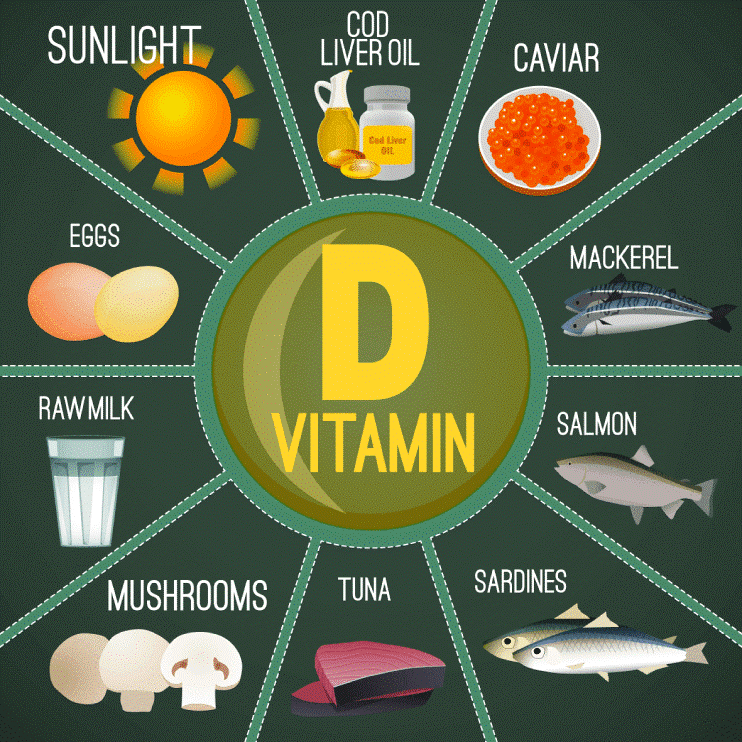
Vitamin D is a fat-soluble vitamin that is naturally present in some foods, added to others, and also available as a dietary supplement.
Latest Information Related to Vitamin D
According to a new study, your vitamin D levels in your 30s and 40s can influence your brain age in your 60s and 70s.
About Vitamin D
Vitamin D (also known as calciferol) is a fat-soluble vitamin that is naturally found in some foods, added to others, and available as a supplement.
It is also produced in the body when ultraviolet (UV) rays from sunlight hit the skin and trigger vitamin D synthesis.
During periods of sunlight, vitamin D is stored in body fat and is gradually used when sunlight is not available.
Very few foods naturally contain vitamin D. Most people get it from fortified foods, which means vitamin D is added to them, such as:
Natural sources include:
- Egg yolks
- Saltwater fish
- Liver
The amount of vitamin D you need each day depends on your age.
Why is Vitamin D So Important?
Vitamin D helps in the absorption of calcium and maintains adequate levels of calcium and phosphorus in the blood, which are essential for healthy bones and teeth.
Without sufficient vitamin D, bones can become thin, weak, or misshapen.
Other functions include:
- Reducing inflammation
- Regulating cell growth
- Supporting neuromuscular and immune functions
- Regulating glucose metabolism
Vitamin D Deficiency
In children, deficiency causes a disease called rickets, in which bones become soft, weak, deformed, and painful.
In teenagers and adults, deficiency leads to osteomalacia, which causes bone pain and muscle weakness.
This deficiency is more common in:
- People with darker skin (higher melanin content)
- People who wear clothing that covers most of the body
Can Vitamin D Be Harmful?
Very high levels of vitamin D in the blood can cause:
- Nausea and vomiting
- Muscle weakness
- Confusion
- Pain
- Loss of appetite
- Dehydration
- Excessive urination and thirst
- Kidney stones
Extremely high levels can lead to:
- Kidney failure
- Irregular heartbeat
- Even death
Topic Related Videos ⬇️
Iran–US Talks Collapse: Why the Islamabad Negotiations Failed
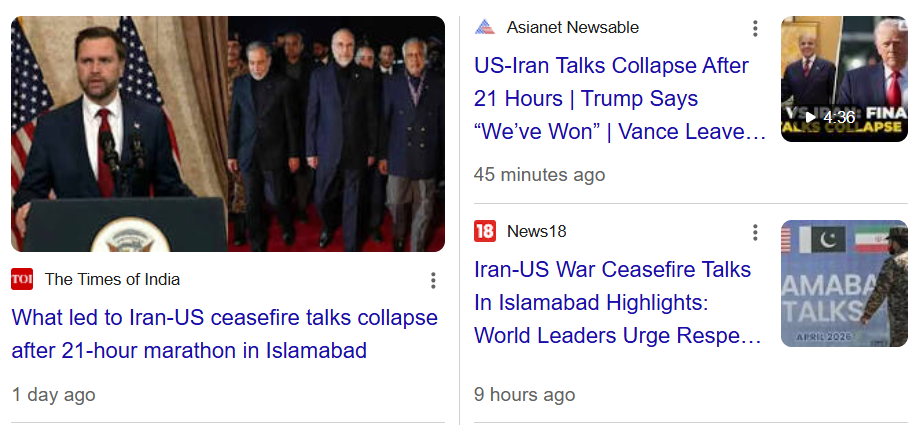
The Iran–US talks collapsed after 21 hours of prolonged discussions in Islamabad. The failure was due to disagreements over the nuclear issue, the Strait of Hormuz, and conflicts regarding frozen assets.
Iran–US Talks: Latest News
High-level talks between the United States and Iran, aimed at establishing a ceasefire and a broader diplomatic framework, ended without an agreement after nearly 21 hours of intense discussions in Islamabad.
Mediated by Pakistan, the talks saw US Vice President JD Vance confirm that American negotiators returned empty-handed.
Despite the failure, the meeting was historically significant—it marked the first high-level political contact between the US and Iran since the 1979 Islamic Revolution.
Key Reasons for the Breakdown
1. Nuclear Issue — The Biggest Dispute
The United States wanted Iran to clearly commit that it would not develop nuclear weapons or related capabilities.
However, Iran maintains that, as a signatory to the Nuclear Non-Proliferation Treaty (NPT), uranium enrichment is its sovereign right.
Before the war, Iran had offered to suspend nuclear activities for a few years, but refused to give up its stockpile of over 440 kg of highly enriched uranium or permanently halt enrichment.
Following the war, Iran’s stance has become even more rigid.
2. Strait of Hormuz
The US demanded that Iran immediately reopen the Strait of Hormuz for international maritime traffic.
Iran recognizes that this strait—through which about 20% of the world’s energy supply passes—is its most powerful strategic leverage.
Therefore, it is unwilling to give up this advantage without significant concessions.
3. Mutual Distrust
Iran accused the United States of breaking past promises and stated that it has not forgotten previous experiences.
This deep trust deficit hindered progress in the negotiations.
4. Frozen Assets and War Reparations
Iran demanded the release of approximately $27 billion held in countries like Iraq, Luxembourg, Bahrain, Japan, Qatar, Turkey, and Germany.
It also sought war reparations for damages caused by airstrikes.
The United States rejected both demands.
Positions of Both Sides
United States
- Primary goal: Prevent Iran from acquiring nuclear weapons capability
- Unwilling to proceed without a clear commitment from Iran
- Described the failure as “more damaging for Iran than for the US”
Iran
- Seeks recognition of its rights, including uranium enrichment
- Demands sanctions relief, reparations, and an end to hostilities
- Accuses the US of making harsh and unlawful demands
- Views diplomacy as a tool to secure national interests
Deadlock and a Ray of Hope
Although the talks collapsed, neither side has completely withdrawn.
The US described its proposal as a “final and best offer.”
Iran’s earlier 10-point demand has now narrowed down to three key issues:
- Strait of Hormuz
- Nuclear issue
- Frozen assets
This indicates some progress.
Iran will consult its military and religious leadership before taking further steps.
Both sides currently have a two-week ceasefire window, suggesting that diplomatic efforts are still ongoing.
Pakistan’s Role
Pakistan enhanced its diplomatic standing by hosting the talks.
However, the lack of a concrete outcome has raised questions about its effectiveness in bridging the gap between the two sides.
Impact on India
India is closely monitoring the situation due to its potential economic impact.
Key concerns include:
- Gas shortages affecting LPG supply
- Possible increase in petrol prices
- Impact on industries such as ceramics, plastics, textiles, fertilizers, agriculture, healthcare, and semiconductors
India has adopted a balanced diplomatic approach:
- Maintained continuous engagement with Iran
- Expressed concern over attacks on Lebanon (without naming any country)
India also managed to secure safe passage for 8–9 vessels through the Strait of Hormuz, highlighting its dependence on this critical energy route.
Topic Related Videos ⬇️